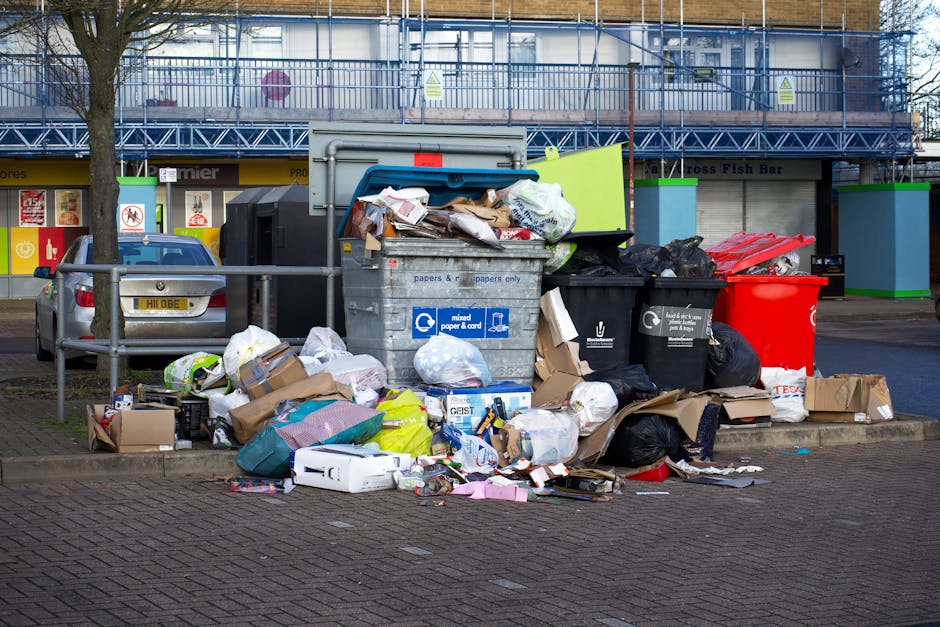
Bulky rubbish collection Stratford by Queen Elizabeth Olympic Park: a practical guide for homes, flats, and local businesses
Sorting out bulky rubbish collection Stratford by Queen Elizabeth Olympic Park can feel oddly overwhelming for something that is, in theory, just "getting rid of a few big items". In practice, you may be dealing with a sofa that will not fit down the stairs, a mattress that has seen better days, a broken fridge, or the aftermath of a clear-out that started with good intentions and ended with bags, boxes, and a mild headache. Truth be told, most people do not need more theory here. They need a clear, local, sensible way to get the job done.
This guide walks you through how bulky waste collection works, what can usually go, what to watch out for, and when a professional clearance service makes more sense than trying to wrestle everything to the kerb yourself. If you are near Stratford and Queen Elizabeth Olympic Park, the details matter: access can be tight, parking can be awkward, and the difference between an easy clearance and a stressful one is often in the planning.
Below, you will find practical advice, a straightforward comparison of options, a real-world example, and a checklist you can use before booking. No fluff. Just the useful stuff.
- Why bulky rubbish collection matters locally
- How the collection process works
- Key benefits and practical advantages
- Who this is for and when it makes sense
- Step-by-step guidance
- Expert tips for better results
- Common mistakes to avoid
- Tools, resources and recommendations
- Law, compliance, standards, or best practice
- Options, methods, or comparison table
- Case study or real-world example
- Practical checklist
- Conclusion
- Frequently asked questions
Why Bulky rubbish collection Stratford by Queen Elizabeth Olympic Park Matters
Bulky waste is not the same as everyday black-bin rubbish. It is larger, harder to move, and often too awkward for standard household disposal. We are talking about items like wardrobes, sofas, bed frames, exercise equipment, old appliances, garden furniture, and the kind of odd leftovers that appear after a flat move or renovation. One large item can be manageable. Three or four? That is when the job starts to bite.
In Stratford, the local setting adds a few extra wrinkles. Queen Elizabeth Olympic Park and the surrounding streets include a mix of modern apartments, shared buildings, retail units, and busy transport routes. That means bulky items can create access issues, noise concerns, and a very visible mess if they are left waiting around too long. If you have ever tried to shift a two-seater sofa through a narrow hallway at 7:30 in the morning, you will know exactly what I mean. It is not glamorous.
For residents, landlords, managing agents, and local businesses, bulky rubbish collection is not just about convenience. It helps keep entrances clear, reduces fire and trip risks, and prevents wasted time waiting for items that simply do not fit ordinary waste routines. It also supports proper sorting and recycling, which is a big part of responsible waste handling these days.
A well-run bulky collection should save effort, reduce stress, and leave the space tidy rather than half-cleared. That sounds obvious, but a surprising number of services fail on the tidy part.
Expert summary: the best bulky rubbish collection is the one that matches your property layout, your item type, and your timing needs without creating extra hassle. Around Stratford, that usually means planning access first and removal second.
How Bulky rubbish collection Stratford by Queen Elizabeth Olympic Park Works
The process is usually more straightforward than people expect, although there are a few steps worth understanding before you book. A good service begins with item details: what needs removing, roughly how much there is, whether anything is heavy or fragile, and where it is located in the property. A sofa on the ground floor is a very different job from the same sofa on the fifth floor with no lift.
In many cases, you can arrange a collection slot, share photos, and get guidance on the likely vehicle size, loading time, and access requirements. That last point matters. In Stratford, parking and loading space can be limited, especially near busy residential blocks or roads with tight restrictions. If the collection team knows this early, they can plan properly. If not, the job becomes slower for everyone.
On the day, the team will usually assess the load, move the items out carefully, and separate different waste types where possible. Good operators handle this in a way that reduces damage to walls, lifts, floors, and door frames. It sounds minor until you have seen a freshly scuffed corridor. Then it matters a lot.
After collection, items are taken for sorting, recycling, reuse, or disposal depending on their condition and material. A reliable provider should be able to explain how waste is handled in plain English. If they cannot, that is a bit of a red flag, to be fair.
If you are planning a broader clear-out rather than one-off bulky removal, it may be useful to look at related services such as furniture clearance, house clearance, or broader waste removal support, depending on what is actually piling up.
Key Benefits and Practical Advantages
There are plenty of reasons people choose a dedicated bulky rubbish service rather than trying to manage the whole thing themselves. Convenience is the obvious one, but the real value is usually broader than that.
- Less physical strain: Heavy lifting is no joke. A mattress, fridge, or old wardrobe can easily turn into a two-person puzzle.
- Faster turnaround: The right team can clear an awkward pile in a fraction of the time it would take to do it yourself.
- Better access handling: Flats, basement spaces, top-floor units, and shared hallways need a careful approach.
- Cleaner finish: Professional collection is less likely to leave a trail of dust, bits of packaging, or scratched paintwork.
- Sorting and recycling support: Reuse and material separation are easier when waste is handled properly from the start.
- Less stress with timing: Useful when you are juggling moving day, a tenancy handover, or a business refit.
One thing that often surprises people is how much mental space bulky waste takes up. The broken treadmill in the spare room becomes background noise for months, then suddenly it is all you can think about. Clearing it out can make the whole place feel lighter. A bit dramatic, maybe, but it is true.
There is also a practical safety benefit. Items left in communal areas can obstruct exits, invite complaints, or create trip hazards. In a busy part of Stratford, where people are coming and going all day, keeping things tidy is not just nice; it is respectful.
Who This Is For and When It Makes Sense
Bulky rubbish collection is useful for a lot of people, and the reasons are not always dramatic. Sometimes it is a single item that has become a nuisance. Sometimes it is a full property clear-out after a move, refurbishment, or change of tenant. Sometimes it is the simple reality that you do not own a van and do not fancy hiring one for a sofa that weighs more than your patience.
It tends to make sense for:
- Flat owners and renters who need furniture removed without damaging communal areas
- Landlords and letting agents dealing with end-of-tenancy leftovers
- Families clearing bedrooms, lofts, garages, or spare rooms
- Local businesses removing old desks, chairs, cabinets, or breakout furniture
- People replacing appliances such as fridges, freezers, or washing machines
- Anyone with no easy transport to take bulky items to a waste facility
It is especially sensible if the item is awkward, heavy, dirty, or difficult to carry safely. A broken wardrobe with sharp edges and loose fixings is not something most people want balancing in a lift, frankly.
For some jobs, a more specific service is a better fit. For example, a single worn-out bed may suit mattress and sofa disposal, while mixed domestic clutter might be better handled through home clearance or flat clearance. Choosing the right type of service saves time and avoids paying for more than you need.
Step-by-Step Guidance
If you want the process to feel easy rather than chaotic, follow a simple sequence. It really does help.
- List the items clearly. Write down what needs removing and note anything unusually heavy, fragile, or hazardous.
- Check access. Think about stairs, lifts, parking, narrow hallways, and whether the item can be moved without dismantling.
- Take a few photos. Photos help the collection team understand volume and access conditions. This is one of those small tasks that saves a lot of back-and-forth.
- Separate special items. Keep appliances, electronics, confidential paperwork, and hazardous materials identified early.
- Request a clear quote. Ask what is included, whether loading is part of the price, and how the team handles recycling or disposal.
- Prepare the space. Move smaller objects out of the way, clear paths, and make sure pets, children, or residents are not in the way.
- Be ready at the collection time. Delays at the door are never fun, for you or the crew.
- Check the area afterwards. Make sure the main route is clear and that no small items, screws, or packaging have been left behind.
If your bulky waste is part of a larger project, such as construction, fit-out, or renovation, you may also want to review builders waste clearance because mixed waste streams often need different handling.
And yes, a quick plan really does beat a rushed one. Every single time.
Expert Tips for Better Results
Small details make a big difference with bulky collections. In our experience, the jobs that go smoothly are almost always the jobs where someone has thought one step ahead.
- Measure before you move. Check sofa width, fridge height, doorway clearance, and lift dimensions. Surprising how often this gets skipped.
- Dismantle where practical. Removing table legs or bed slats can save a lot of hassle.
- Protect the route. Blankets, corner guards, or floor protection can be useful in tight communal areas.
- Group items by location. Keeping all waste in one spot reduces carrying time and confusion.
- Flag anything unusual early. Items with gas, refrigerant, batteries, or chemical residues need careful handling.
- Ask about reuse options. Some items may be suitable for reuse or parts recovery rather than straight disposal.
It also helps to think about timing. Early morning collections can be calmer in busy neighbourhoods, while later slots may suit households where everyone is out during the day. There is no universal best time; it depends on your block, your neighbours, and the building rules. Life is annoyingly specific like that.
If privacy is a concern, especially in a home office or small business, pairing bulky waste with secure document handling through confidential shredding can keep everything tidy in one go.
Common Mistakes to Avoid
Most problems are preventable. They usually come from rushing, guessing, or assuming the collection team will "just sort it". That phrase causes trouble. Quite a lot of trouble.
- Underestimating volume: What looks like two items in a corner can become a full load once moved out.
- Ignoring access issues: A blocked parking space or a locked side gate can delay the collection.
- Mixing hazardous items with general waste: Batteries, paint, chemicals, and similar items need special care.
- Leaving dismantling too late: If a bed frame or wardrobe needs stripping down, do it before collection day if possible.
- Not checking item condition: Some items can be reused, some need recycling, and some must be disposed of properly.
- Forgetting building rules: Communal bins, loading areas, and lift use may be controlled by your block or managing agent.
A common one in Stratford is forgetting to plan around shared entrances and busy foot traffic. When people are coming and going all day, leaving bulky items in a corridor is asking for complaints. Nobody wants that call from the building manager at 9:15 on a Monday.
Another avoidable mistake is choosing the cheapest option without checking what is included. A low price can sound fine until loading, labour, or disposal terms become vague. Clarity wins here.
Tools, Resources and Recommendations
You do not need a toolkit like a tradesperson, but a few basic items can make bulky rubbish removal easier and safer.
- Measuring tape: Useful for doors, stairs, lift interiors, and large furniture.
- Heavy-duty gloves: Especially for sharp edges, splinters, or dusty garage items.
- Reusable straps or moving blankets: Helpful for safer handling and protecting surfaces.
- Marker pen and labels: Handy if you are sorting keep, donate, recycle, and remove piles.
- Phone camera: Good for documenting the load and sending photos for a quote.
For recycling-heavy jobs, it can also help to understand what types of waste can be handled together and what cannot. A useful reference point is what can go in a skip, which is a practical way to think about sorting, even if you are not hiring a skip at all.
If you are dealing with old appliances, the right route matters. Fridges and similar items often need special processing, so fridge and appliance removal is worth considering rather than treating everything as generic rubbish.
For bigger domestic clearances, these related services can also be useful depending on the space involved: garage clearance, loft clearance, garden clearance, and furniture disposal.
Law, Compliance, Standards, or Best Practice
With waste, compliance is not something to wing. The exact responsibilities can vary depending on whether you are a household, landlord, tenant, or business, but the general principle is the same: waste should be handled safely, passed to an appropriate carrier, and treated in line with current UK practice.
For businesses in particular, records, duty of care, and correct segregation matter. If you are clearing an office near Stratford, it is sensible to use a service that understands commercial waste handling rather than treating office furniture and paperwork like ordinary household clutter. A service such as office clearance or business waste removal may be more appropriate than a one-off ad hoc solution.
Some items require extra caution. Hazardous materials, sharp waste, batteries, liquids, gas-related items, and certain electrical goods should never be mixed in casually. If you are unsure, ask before collection. That is not fussiness; it is good practice.
You should also check insurance and safety arrangements, especially where items need to be removed from upper floors, tight corridors, or shared buildings. A professional provider should be able to explain how they manage lifting, access, and site protection. If that reassurance is missing, keep asking questions. A bit of caution is healthy here.
For providers, pages such as health and safety policy, insurance and safety, and recycling and sustainability can help demonstrate the standards behind the service. For customers, they are useful signals that the work will be handled properly.
Options, Methods, or Comparison Table
There is more than one way to clear bulky rubbish. The right choice depends on time, access, quantity, and how much lifting you want to do yourself. Here is a simple comparison.
| Method | Best for | Pros | Limitations |
|---|---|---|---|
| Self-removal | One or two manageable items | Can be cheaper if you already have transport | Time-consuming, heavy lifting, and parking/logistics can be awkward |
| Skip hire | Ongoing projects or mixed waste over several days | Handy for phased clear-outs | Needs space, permits may be required, loading is your job |
| Dedicated bulky collection | Large items, awkward access, quick turnarounds | Fast, convenient, labour included, easier for flats | Can be less suitable for waste you want to load gradually |
If you want a better sense of how skips compare with a man-and-van style clearance, the service details around pricing and quotes are worth reviewing before you decide. It is easier to choose once you know what is included.
For a lot of Stratford residents, the dedicated bulky collection option wins because access is the real obstacle, not the items themselves. A sofa is just a sofa until it has to go down three flights of stairs and out through a narrow shared lobby.
Case Study or Real-World Example
A fairly typical scenario: a couple in a Stratford apartment near Queen Elizabeth Olympic Park decide to clear a spare room before relatives arrive for a weekend visit. The room has an old mattress, a broken desk chair, a bulky wardrobe panel, and a box of mixed clutter that has somehow grown over two years. Nothing dramatic, just one of those rooms everyone quietly avoids.
They first check whether the lift is big enough for the mattress and whether the building allows temporary loading outside the front entrance. They take a few photos, measure the widest item, and group everything near the hallway so it is easy to access. One item turns out to be heavier than expected, so it is left intact rather than forced apart. Sensible move.
On collection day, the team arrives with the right vehicle and removes the items carefully, avoiding damage to the wall corners and shared flooring. The process is over quickly, and the room is immediately usable again. Not perfect cinema-style drama, just a decent, satisfying result. You know the sort of feeling when a room suddenly has space to breathe? That.
In a business setting, the same logic applies. A small office refresh might involve old chairs, storage units, and a broken printer cabinet. If the team can remove it in one visit, staff get back to work without living around stacked furniture for another week.
Practical Checklist
Use this checklist before booking your bulky rubbish collection.
- List every item you want removed
- Measure any large or awkward pieces
- Check stairs, lift size, and door widths
- Confirm parking or loading access
- Separate hazardous, electrical, and confidential items
- Take clear photos for the collection team
- Ask what is included in the quote
- Check whether disassembly is needed
- Make sure communal areas stay clear
- Prepare the route from room to exit
- Confirm the collection time and any building rules
- Review related services if the job is bigger than one item
If the job is more than a simple furniture pickup, it may be worth combining services. A mixed domestic clear-out might sit better under home clearance, while a tenant handover may benefit from house clearance. That way, you are not trying to force one job into the wrong box.
Conclusion
Bulky rubbish collection Stratford by Queen Elizabeth Olympic Park is at its best when it is simple, well-planned, and respectful of the local setting. Whether you are clearing a flat, removing a single oversized item, or dealing with a bigger property refresh, the key is to think ahead about access, item type, and the level of help you actually need.
The good news is that most bulky clearances are very manageable once the plan is clear. A little preparation saves a lot of effort, and a sensible service can turn a stressful job into a neat, tidy reset of the space. That is the real win. Less clutter, less waiting around, less wrestling with furniture that should probably have been retired years ago.
Get a free quote today and see how much you can save.
If you are ready to clear the space and move on with your day, take the next step with confidence. The room will feel different afterwards. Better, lighter, calmer. Sometimes that is all you need.
Frequently Asked Questions
What counts as bulky rubbish?
Bulky rubbish usually means large items that are too awkward for normal household waste collections. That often includes sofas, mattresses, wardrobes, tables, appliances, and other oversized household or office items.
Can bulky items be collected from flats or upper floors?
Yes, but access needs to be checked first. Stairs, lifts, shared hallways, and building rules can all affect how the collection is done, so it helps to mention these details early.
Do I need to move the items outside before collection?
Not always. Many bulky collection services can remove items from inside the property, although this depends on access and the type of item. It is best to confirm this when booking.
How do I know whether to choose bulky collection or a skip?
If you have awkward furniture, limited space, or need items removed quickly, bulky collection is often the better choice. If you are loading waste gradually over several days, a skip may suit you more.
Can old furniture be reused instead of disposed of?
Sometimes, yes. If furniture is in reasonable condition, it may be suitable for reuse or recovery. If it is broken, damaged, or unsafe, disposal is usually the right route.
Are fridges and appliances treated differently?
Often, yes. Appliances can need special handling because of refrigerants, electrical parts, or metal components. A dedicated appliance service is usually the safer option.
What should I do with hazardous items?
Keep hazardous items separate and tell the collection provider in advance. Paints, chemicals, batteries, and similar materials need careful handling and should not be mixed with general bulky waste.
Is bulky rubbish collection suitable for businesses?
Yes, especially for offices, shops, and small commercial premises that need desks, chairs, cabinets, or other large items removed without disrupting the workplace.
How can I avoid damage during removal?
Clear the route, measure large items, protect corners if needed, and make sure the team knows about narrow staircases or tight turns. Good preparation makes a big difference.
What if I only have one large item?
That is still a valid reason to book a collection. One awkward item can be more trouble than a small pile, especially if it is heavy or difficult to move safely.
Can bulky rubbish collection be combined with a bigger clear-out?
Yes. If you are clearing a whole flat, loft, garage, or office, it can be more efficient to arrange a broader clearance rather than separate item-by-item removal.
What is the most important thing to check before booking?
Access. In most cases, access is the detail that decides whether the job feels easy or frustrating. Stairs, lifts, parking, and item size all matter more than people expect.
For a service that fits your situation properly, it is worth exploring the wider clearance options and choosing the one that matches your load, your layout, and your timing. That little bit of thought upfront saves a lot of grief later, and honestly, that is usually the best kind of win.